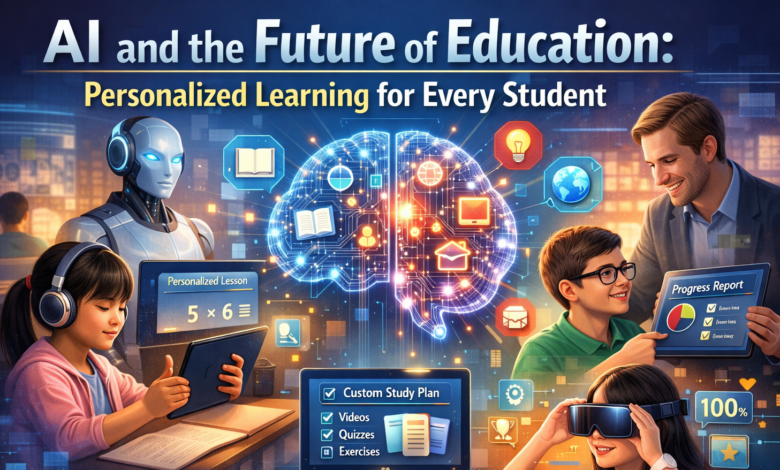
AI and the Future of Education: Personalized Learning for Every Student
Outline: AI and the Future of Education: Personalized Learning for Every Student
H1: Introduction
- What is AI in Education?
- Why Personalized Learning Matters
H2: Understanding AI in the Classroom
- H3: What AI Brings to the Table
- H3: Current Use Cases of AI in Education
- H4: Intelligent Tutoring Systems
- H4: Learning Management Systems with AI Integration
- H4: Adaptive Learning Platforms
H2: The Concept of Personalized Learning
- H3: What Personalized Learning Means
- H3: The Power of Customization
- H3: Traditional vs. Personalized Education
H2: How AI Enables Personalized Learning
- H3: Student Performance Data and Insights
- H3: Real-Time Feedback and Adjustments
- H3: AI-Driven Content Recommendations
H2: Benefits of Personalized Learning with AI
- H3: Boosted Student Engagement
- H3: Improved Academic Outcomes
- H3: Support for Different Learning Styles
H2: Challenges and Ethical Concerns
- H3: Data Privacy in AI Systems
- H3: Equity and Accessibility Issues
- H3: Teacher-Student Relationship Dynamics
H2: The Role of Educators in an AI-Powered Classroom
- H3: Teachers as Guides and Facilitators
- H3: Reskilling for the Digital Era
- H3: Maintaining the Human Touch
H2: AI and Special Education
- H3: Helping Students with Disabilities
- H3: Speech Recognition and Language Tools
- H3: Tailored Curricula for Unique Needs
H2: Case Studies: Real-World Success Stories
- H3: Knewton’s Adaptive Learning
- H3: Carnegie Learning and Smart Tutoring
- H3: Squirrel AI in China
H2: Tools and Technologies Making It Happen
- H3: Top AI EdTech Platforms
- H3: Role of Big Data in Education
- H3: Machine Learning vs. Traditional Programming
H2: Future Trends in AI and Education
- H3: Predictive Analytics for Career Pathways
- H3: VR and AI Combined for Immersive Learning
- H3: Lifelong Learning with AI
H2: Global Perspectives on AI in Education
- H3: AI in Developed vs. Developing Countries
- H3: Government Policies and Support
H2: Overcoming the Barriers to Adoption
- H3: Infrastructure and Cost
- H3: Teacher Training and Awareness
- H3: Public Trust in AI Systems
H2: Conclusion
- Summarizing the Impact and Future Potential
H2: FAQs
- What is personalized learning in AI?
- Can AI replace teachers in the future?
- How safe is student data with AI tools?
- Which countries are leading in AI-powered education?
- Will AI widen or close the educational gap?
AI and the Future of Education: Personalized Learning for Every Student
Introduction
Have you ever wondered how your classroom might change in ten years? Imagine a space where your learning journey is tailor-made just for you, where your strengths are amplified, and your weaknesses are handled with care and support. That’s the promise of AI in education—specifically, personalized learning for every student.
We’re not talking about replacing teachers with robots. Nope. We’re talking about AI as a smart sidekick, helping students learn in ways that actually work for them. Let’s explore how this futuristic idea is becoming a present-day reality.
Understanding AI in the Classroom
What AI Brings to the Table
AI isn’t just some Silicon Valley buzzword. It’s already transforming industries—from healthcare to banking—and now, it’s making waves in education. In classrooms, AI acts like a super assistant, offering insights, predictions, and tailored content.
Current Use Cases of AI in Education
Intelligent Tutoring Systems
These are AI-powered programs that act like personal tutors. They track how you answer questions and help you through problems in real-time. Think of them like your always-available homework buddy.
Learning Management Systems with AI Integration
Platforms like Canvas and Blackboard now use AI to recommend resources, remind students about deadlines, and even identify at-risk students early.
Adaptive Learning Platforms
AI analyzes how fast or slow you grasp concepts and adjusts the difficulty of materials accordingly. Imagine learning math at your pace—not the pace of the whole class.
The Concept of Personalized Learning
What Personalized Learning Means
Personalized learning is all about customizing education to fit each student’s needs, interests, and pace. No more one-size-fits-all.
The Power of Customization
Whether you’re a visual learner or someone who prefers listening, AI can adjust the format of lessons to suit your style.
Traditional vs. Personalized Education
In traditional classrooms, teachers follow a fixed curriculum. Personalized learning breaks that mold and adapts content dynamically—like Netflix recommending your next favorite show, but for algebra!
How AI Enables Personalized Learning
Student Performance Data and Insights
AI analyzes vast volumes of data to find trends in learning. It can flag when a student is struggling before anyone else even notices.
Real-Time Feedback and Adjustments
Forget waiting days for test results. Students can rapidly learn from their mistakes thanks to AI’s instant response.
AI-Driven Content Recommendations
AI curates learning materials—videos, quizzes, readings—based on each student’s current understanding and interest level. It’s like Spotify, but for knowledge.
Benefits of Personalized Learning with AI
Boosted Student Engagement
When students feel understood and supported, they’re more likely to engage and stay motivated.
Improved Academic Outcomes
Personalized learning lowers dropout rates and raises exam results, according to studies. It makes learning more efficient.
Support for Different Learning Styles
No two students are alike. Some learn by doing, while others learn by watching or hearing. AI makes room for all.
Challenges and Ethical Concerns
Data Privacy in AI Systems
All that personalized content comes with a cost—your data. Ensuring student data remains secure and private is non-negotiable.
Equity and Accessibility Issues
Not every school has the budget for AI tools. This could widen the gap between rich and poor schools unless addressed head-on.
Teacher-Student Relationship Dynamics
There’s a risk that too much reliance on AI might reduce personal interactions. Balance is key.
The Function of Teachers in an AI-Powered Learning Environment
Teachers as Guides and Facilitators
With AI handling the routine stuff, teachers can focus on what they do best—connecting with students and encouraging curiosity.
Reskilling for the Digital Era
Teachers will need training to integrate AI tools effectively. The future classroom needs both tech-savvy and heart-savvy educators.
Maintaining the Human Touch
AI can guide, but only a human can inspire. Emotional intelligence and empathy are still teacher superpowers.
AI and Special Education
Helping Students with Disabilities
Text-to-speech, speech-to-text, and other AI tools provide equal educational opportunities for kids with learning disabilities.
Speech Recognition and Language Tools
For students with language barriers or speech challenges, AI-powered translation and dictation tools are game-changers.
Tailored Curricula for Unique Needs
With AI, lesson plans can be modified to fit students with autism, ADHD, dyslexia, and other special learning needs.
Case Studies: Real-World Success Stories
Knewton’s Adaptive Learning
Knewton uses AI to tailor coursework in real-time based on how students perform. It is comparable to having a tutor who is always awake.
Carnegie Learning and Smart Tutoring
This system uses AI to mimic human tutors, analyzing student responses and providing personalized hints and explanations.
Squirrel AI in China
This AI platform has already helped over a million Chinese students learn better with real-time adjustments and data-driven feedback.
Tools and Technologies Making It Happen
Top AI EdTech Platforms
Learning delivery and assessment are being redefined by tools such as ScribeSense, Century Tech, and Querium.
Role of Big Data in Education
Big data helps AI spot learning trends, predict outcomes, and personalize paths. It’s the brain behind the machine.
Machine Learning vs. Traditional Programming
Unlike fixed algorithms, machine learning adapts and evolves—just like a student learning from experience.
Future Trends in AI and Education
Predictive Analytics for Career Pathways
AI could one day help students choose careers based on skills, interests, and market trends—long before they hit college.
VR and AI Combined for Immersive Learning
Imagine dissecting a virtual frog in biology class—with AI guiding your every move. That’s the future.
Lifelong Learning with AI
Education won’t stop at graduation. AI will help adults upskill and reskill throughout their careers.
Global Perspectives on AI in Education
AI in Developed vs. Developing Countries
While the U.S., China, and Finland lead the way, developing countries are starting to adopt mobile-based AI tools to bridge educational gaps.
Government Policies and Support
Countries are now drafting AI-in-education policies to ensure safe, inclusive, and ethical use in schools.
Overcoming the Barriers to Adoption
Infrastructure and Cost
AI tools can be pricey. To guarantee fair access, governments and organizations must make investments.
Teacher Training and Awareness
Professional development programs need to evolve to prepare teachers for AI integration.
Public Trust in AI Systems
Transparent algorithms and ethical AI development will help build trust among parents, teachers, and students.
Conclusion
AI is meant to empower educators, not to replace them. Education in the future will be student-centered, data-driven, and personalized. With AI as a supportive tool, we can unlock every learner’s potential, regardless of background or ability.
The key? Balancing tech with human connection, making learning not just smarter—but more meaningful.
FAQs
1. What is personalized learning in AI?
It’s a learning model where AI tailors educational content and pace based on individual student needs and learning styles.
2. Can AI replace teachers in the future?
No, AI can assist but not replace the unique human touch that teachers bring through empathy, motivation, and creativity.
3. How safe is student data with AI tools?
Data safety depends on the platform’s security measures. Schools must select resources with robust privacy policies and encryption.
4. Which countries are leading in AI-powered education?
China, the U.S., and Finland are among the frontrunners in adopting AI for education at scale.
5. Will AI widen or close the educational gap?
It depends on access. If deployed equitably, AI can help close gaps—but without support, it could also worsen them.