Artificial Intelligence in Creative Industries: Is the Machine the Next Picasso?
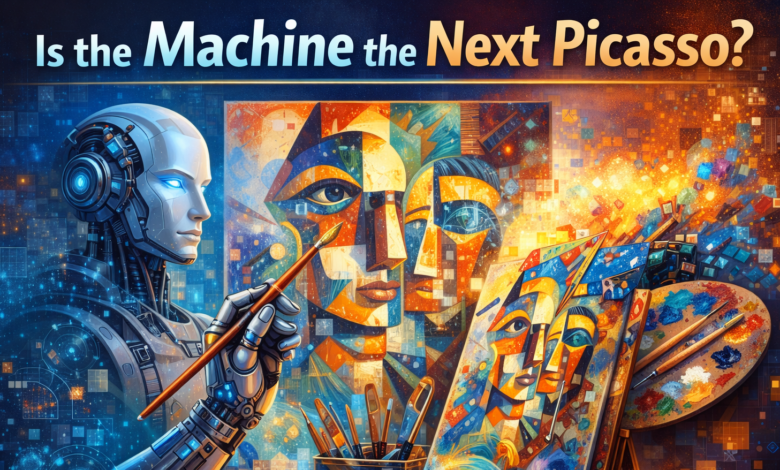
- H1: Artificial Intelligence in Creative Industries: Is the Machine the Next Picasso?
- H2: Introduction
- H3: Artificial Intelligence’s Ascent in Creativity
- H3: Why This Question Matters Today
- H2: Understanding Creativity: Human vs. Machine
- H3: What Is Creativity Really?
- H3: Can Machines Think Creatively?
- H2: AI in Art
- H3: Generative Art and Algorithms
- H3: Popular Examples (like the “Portrait of Edmond de Belamy” by Obvious)
- H4: AI and Abstract Art
- H4: AI and Realism
- H2: AI in Music Composition
- H3: From Beethoven to Beats by Bots
- H3: Collaborations Between Artists and Algorithms
- H2: AI in Writing and Storytelling
- H3: Can AI Write a Bestseller?
- H3: The Role of GPT and Other Language Models
- H2: AI in Film and Animation
- H3: Scriptwriting and Scene Generation
- H3: Deepfakes and Visual FX
- H2: AI in Design and Advertising
- H3: Logo and Graphic Design by AI
- H3: Personalized Marketing and Creativity
- H2: Pros of AI in the Creative Process
- H3: Speed, Scale, and Novelty
- H3: Accessibility for Non-Artists
- H2: Challenges and Ethical Concerns
- H3: Authenticity and Ownership
- H3: Plagiarism and Originality
- H3: Job Displacement
- H2: Human-AI Collaboration: The New Creative Duo
- H3: Augmented Creativity vs. Artificial Creativity
- H3: Real-World Examples of Human-AI Teams
- H2: Is AI the Next Picasso?
- H3: Understanding What Made Picasso “Picasso”
- H3: Can AI Replace the Human Soul in Art?
- H2: The Future of AI in Creative Fields
- H3: Hybrid Models and Ethical Guidelines
- H3: Lifelong Learning Machines and Style Evolution
- H2: Conclusion
- H2: FAQs
- H3: Can AI truly be creative?
- H3: Will AI replace artists in the future?
- H3: Is AI art considered real art?
- H3: What are the best AI tools for creatives?
- H3: How can artists work with AI instead of against it?
🧠 Artificial Intelligence in Creative Industries: Is the Machine the Next Picasso?
🔍 Introduction
Artificial Intelligence’s Ascent in Creativity
Let’s face it — artificial intelligence is no longer just about beating humans at chess or powering your smart assistant. It’s now painting portraits, writing novels, composing symphonies, and even designing logos. The line between machine and artist is blurring faster than ever before.
Why This Question Matters Today
The creative industries — once considered the final frontier of human uniqueness — are now seeing rapid disruption by AI. The crucial question now is: Will the machine become the next Picasso? Or are we simply witnessing a new form of tool-assisted expression?
🤔 Understanding Creativity: Human vs. Machine
What Is Creativity Really?
At its core, creativity is the capacity to reimagine existing ideas. It involves intuition, emotion, context, and often — happy accidents. It involves more than just creating things; it also involves communicating ideas.
Can Machines Think Creatively?
AI, especially through neural networks and deep learning, can mimic patterns and styles. But does that count as thinking creatively? Well, it depends on how you define “thinking.” Machines don’t have feelings or experiences — yet — but they can definitely surprise us.
🎨 AI in Art
Generative Art and Algorithms
AI can now generate original artworks using algorithms like GANs (Generative Adversarial Networks). These systems are trained on thousands of images and can spit out pieces that feel “new.”
Famous Examples
Do you recall the painting “Portrait of Edmond de Belamy,” which was created by AI? It sold at Christie’s for $432,500. That wasn’t luck — it was a clear signal that AI art is not just a gimmick.
AI and Abstract Art
Abstract styles are easier for AI to produce, mainly because interpretation is so subjective. Think bold colors, weird shapes, and a whole lot of “what does this even mean?”
AI and Realism
When trained on real-life photos and classical paintings, AI can replicate realistic styles — sometimes with better technical precision than humans.
🎵 AI in Music Composition
From Beethoven to Beats by Bots
AI has composed classical symphonies, jazz tracks, and EDM beats. This change is being driven by tools like Amper Music and AIVA. You can give it a mood and tempo — and boom — a whole track is born.
Collaborations Between Artists and Algorithms
Artists such Taryn Southern have dropped entirely albums utilizing AI. It’s not about replacing talent; it’s about adding another creative collaborator into the studio — one that never sleeps.
📚 AI in Writing and Storytelling
Can AI Write a Bestseller?
Sure, AI can crank out blog posts, poetry, and even full novels. But whether it can emotionally move readers — that’s still debatable. Tools like Sudowrite and ChatGPT are pushing boundaries daily.
The Role of GPT and Other Language Models
Large language models can write in dozens of styles, imitate famous authors, and even hold conversations. But again, they lack the lived experience that fuels deep, nuanced storytelling.
🎬 AI in Film and Animation
Scriptwriting and Scene Generation
AI tools are now used to outline screenplays, generate dialogue, and even suggest camera angles. With platforms like RunwayML and ChatGPT-powered scripts, filmmaking is entering a new era.
Deepfakes and Visual FX
While controversial, deepfakes and AI-generated actors are revolutionizing visual effects. AI can also upscale footage, enhance facial expressions, and create surreal animations with ease.
🖌️ AI in Design and Advertising
Logo and Graphic Design by AI
Anyone can create a brand logo in minutes with platforms like Looka and Canva’s AI features. It’s design without the designer — but not necessarily without style.
Personalized Marketing and Creativity
AI is capable of analyzing customer data to provide adverts that are specific to your preferences. It’s like having a creative team that knows your every move and taste.
✅ Pros of AI in the Creative Process
Speed, Scale, and Novelty
AI can produce massive volumes of content quickly. It’s a productivity powerhouse — perfect for brainstorming or prototyping.
Accessibility for Non-Artists
Even if you’ve never drawn a stick figure, AI lets you experiment with art, music, and writing. It democratizes creativity.
⚠️ Challenges and Ethical Concerns
Authenticity and Ownership
Who owns an AI-generated piece of art? The user? The programmer? The machine? That’s still legally messy.
Plagiarism and Originality
AI doesn’t “create” from scratch — it remixes. That calls into question both possible copyright violations and genuine originality.
Job Displacement
From illustrators to copywriters, some fear that AI could phase out certain creative roles. However, it might potentially produce new ones.
🤝 Human-AI Collaboration: The New Creative Duo
Augmented Creativity vs. Artificial Creativity
Consider AI to be an addition rather than a substitute. It boosts your imagination and offers ideas you might never have considered.
Real-World Examples of Human-AI Teams
Designers use Midjourney for concept art. Writers use AI for drafting. Musicians mix machine-made loops with live instruments. It’s a partnership, not a takeover.
🎭 Is AI the Next Picasso?
Understanding What Made Picasso “Picasso”
Picasso wasn’t just an artist — he was a rebel, an innovator, a storyteller. His art was firmly grounded in both cultural criticism and personal experience.
Can AI Replace the Human Soul in Art?
AI doesn’t feel, no matter how sophisticated it becomes. It doesn’t dream. It can replicate form, but not essence. That human touch? Irreplaceable.
🔮 AI’s Prospects in Creative Industries
Hybrid Models and Ethical Guidelines
Ethical Principles and Hybrid Models The future is about striking a balance between utilizing AI as a tool and establishing limits for openness, permission, and payment.
Lifelong Learning Machines and Style Evolution
Imagine an AI that grows with you — evolving as your style changes, learning your tastes, and even suggesting innovations you hadn’t thought of.
🧾 Conclusion
AI has already changed the creative game — and it’s not slowing down. But it’s not here to steal your brush, pen, or mic. Rather, it is an innovative new partner, a self-governing paintbrush. Picasso once remarked, “Every child is an artist.” We still have the essence of art, even though maybe all machines are now.
❓ FAQs
1. Can AI truly be creative?
AI can mimic and generate based on patterns, but its “creativity” lacks emotional intent. It’s impressive, but not soulful.
2. Will AI replace artists in the future?
Not likely. AI will reshape creative roles but not eliminate the need for human imagination and emotional intelligence.
3. Is AI art considered real art?
Yes — if it evokes a response or serves a purpose. But debates around authenticity and value continue.
4. What are the best AI tools for creatives?
Some popular tools include Midjourney, DALL·E, AIVA, RunwayML, and ChatGPT for writing.
5. How can artists work with AI instead of against it?
Learn the tools, use AI as a collaborator, and focus on what machines can’t replicate — your unique human perspective.