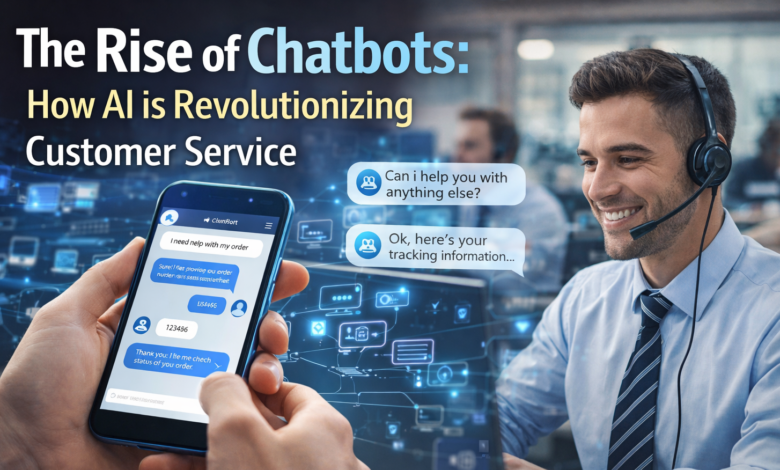
The Rise of Chatbots: How AI is Revolutionizing Customer Service
H1: The Rise of Chatbots: How AI is Revolutionizing Customer Service
- H2: Introduction
- H2: What Are Chatbots?
- H3: Basic Definition and Functionality
- H3: Evolution of Chatbots Over Time
- H2: The AI Behind Modern Chatbots
- H3: Natural Language Processing (NLP)
- H3: Machine Learning and Adaptability
- H2: Key Benefits of Chatbots in Customer Service
- H3: 24/7 Availability
- H3: Instant Responses
- H3: Cost Efficiency for Businesses
- H3: Scalability and Consistency
- H2: Real-World Applications of AI Chatbots
- H3: E-commerce and Online Retail
- H3: Banking and Finance
- H3: Healthcare and Telemedicine
- H3: Travel and Hospitality
- H2: Human vs AI: Can Chatbots Replace Human Agents?
- H3: Strengths of AI
- H3: Limitations and the Need for Human Touch
- H2: Personalization and Customer Experience
- H3: How Chatbots Use Data to Improve Interactions
- H3: Creating Seamless Omnichannel Experiences
- H2: Ethical Considerations and Challenges
- H3: Data Privacy and User Consent
- H3: Transparency in AI Interactions
- H2: The Future of AI Chatbots in Customer Service
- H3: Predictive Support
- H3: Multilingual and Emotionally Aware Bots
- H2: How Businesses Can Integrate AI Chatbots Successfully
- H3: Choosing the Right Platform
- H3: Training and Customization
- H3: Ongoing Evaluation and Improvement
- H2: Conclusion
- H2: FAQs
The Rise of Chatbots: How AI is Revolutionizing Customer Service
Introduction
Imagine walking into a store, asking a question, and instantly getting the correct answer — no waiting, no confusion, and no attitude. That’s the dream, right? Well, that’s exactly what AI-powered chatbots are bringing to the digital world. A significant shift in customer service is currently being driven by chatbots.
What Are Chatbots?
Basic Definition and Functionality
In essence, chatbots are computer programs created that imitate human-user interaction. Whether it’s answering basic FAQs or helping you reset your password, they’re built to assist users efficiently.
Evolution of Chatbots Over Time
From the rule-based bots of the 90s that could only give rigid responses to today’s AI-driven bots that can understand context and intent, chatbots have come a long way. We’re now in the age of conversational AI — and it’s smarter than ever.
The AI Behind Modern Chatbots
Natural Language Processing (NLP)
Natural language processing (NLP) allows chatbots to comprehend and evaluate human speech. It’s why you can type “Hey, I need help with my bill” and the bot gets it, even though you didn’t follow a strict script.
Machine Learning and Adaptability
Today’s bots don’t just respond — they learn. Over time, they pick up on user behaviors, common questions, and even slang, becoming more helpful and accurate the more they’re used.
Key Benefits of Chatbots in Customer Service
24/7 Availability
Let’s face it — humans need sleep. Chatbots? Not so much. They’re ready to assist customers day or night, offering round-the-clock support that keeps businesses running even while the lights are out.
Instant Responses
No more waiting for an email response or listening to obnoxious hold music. Chatbots deliver information in real-time, instantly satisfying user needs.
Cost Efficiency for Businesses
Hiring a full team of live agents is expensive. With chatbots handling repetitive queries, companies can save on overhead while still delivering stellar service.
Scalability and Consistency
Whether it’s 10 customers or 10,000, chatbots handle volume like a pro. And unlike humans, their tone never changes — every customer gets a consistent experience.
Real-World Applications of AI Chatbots
E-commerce and Online Retail
Chatbots help shoppers track orders, recommend products, and even upsell — all without a human agent. Companies like Sephora and H&M are already using this to increase consumer interaction.
Banking and Finance
Do you need to block a stolen card or check your balance? Banks like Bank of America have chatbots (like Erica) doing just that — quickly and securely.
Healthcare and Telemedicine
Chatbots now assist with appointment bookings, symptom checks, and reminders for medication — a real game-changer in patient engagement.
Travel and Hospitality
From booking flights to finding hotel check-in times, travel bots reduce friction for both companies and travelers.
Human vs AI: Can Chatbots Replace Human Agents?
Strengths of AI
In terms of efficiency and scalability, chatbots are superior due to their speed, memory, and round-the-clock availability.
Limitations and the Need for Human Touch
However, bots lack empathy, nuance, and emotional intelligence. Complex or sensitive situations still demand human care. Consider bots as the initial line of defense rather than the entire force.
Personalization and Customer Experience
How Chatbots Use Data to Improve Interactions
Chatbots are able to customize talks by using past interactions and purchase data. Users feel appreciated and understood as a result, which increases loyalty.
Creating Seamless Omnichannel Experiences
Whether customers are on social media, a website, or a mobile app, chatbots ensure their journey stays smooth and consistent across platforms.
Ethical Considerations and Challenges
Data Privacy and User Consent
Chatbots handle a lot of personal information. So, companies need to ensure data protection, secure storage, and clear opt-in policies to earn user trust.
Transparency in AI Interactions
It should always be obvious to users that they are speaking with a bot. Transparency establishes expectations for the exchange and increases credibility.
AI Chatbots’ Prospects in Customer Support
Predictive Support
Future bots won’t just respond — they’ll anticipate. Imagine a chatbot telling you your delivery might be late before you even think to ask.
Multilingual and Emotionally Aware Bots
AI is becoming more adept at identifying emotions and even comprehending tone. Soon, bots may adjust their responses depending on how frustrated or confused you sound.
How Businesses Can Integrate AI Chatbots Successfully
Choosing the Right Platform
Not all bots are created equal. Businesses should choose platforms that align with their needs, whether it’s live chat support, social integration, or e-commerce functionality.
Training and Customization
Custom scripts, responses, and flows tailored to your brand tone and customer behavior can make a huge difference in chatbot performance.
Ongoing Evaluation and Improvement
Regular audits, customer feedback loops, and performance metrics help ensure the bot is always improving and adapting to changing needs.
Conclusion
AI chatbots are now more than just a trend; they are essential. They’re redefining customer service by blending speed, intelligence, and convenience. However, the way they are utilized determines how effective they are, just like any other instrument. The most intelligent businesses are using AI to improve people rather than replace them.
The future of customer support? It’s chatbots and humans, working side-by-side, creating experiences that are not just efficient, but also unforgettable.
FAQs
1. Is it secure to provide chatbots personal information?
Yes, as long as the chatbot follows data protection laws and encrypts conversations, it’s generally safe. Always check if the service is GDPR or HIPAA-compliant depending on your region.
2. Can chatbots handle complaints or angry customers?
To a certain extent, yes. They can de-escalate with polite language, but for serious issues, they often escalate the conversation to a human agent.
3. Do chatbots really reduce business costs?
Absolutely. By automating repetitive queries, they cut down on labor costs, reduce response time, and improve operational efficiency.
4. How do chatbots understand what I’m saying?
They use Natural Language Processing (NLP), which helps them understand human language, context, and intent.
5. Will human customer service representatives be entirely replaced by chatbots?
Not entirely. While they can handle basic queries, human agents are still essential for complex, emotional, or high-stakes situations.